




How Small Practices Can Outsource Revenue Cycle Management?
- Updated Date Jul 29, 2026
- Revenue Cycle Management
- Follow
Running a small practice means you are already handling patient care, staff issues, scheduling, compliance, and daily operations. On top of that, if claims are delayed, denials keep coming back, A/R keeps growing, or reports do not clearly show where money is stuck, the revenue cycle can quickly become a daily pressure point.
The challenge is that most small practices do not have a large billing team. The same staff may be handling eligibility checks, prior authorizations, claim submission, payment posting, patient calls, and payer follow-up. When the workload grows, small gaps can turn into delayed payments and missed revenue.
This is where RCM outsourcing can help, but it does not mean you have to hand over everything at once. A small practice can outsource specific revenue cycle tasks first, such as denials, A/R follow-up, eligibility verification, or prior authorization, and then expand only when it makes sense.
In this guide, let’s understand how small practices can outsource RCM in a practical way, what tasks to start with, how much it may cost, and how to keep control while getting the right support.
What Does RCM Outsourcing Mean for a Small Practice?
RCM outsourcing means getting outside support to manage the financial workflow of your practice, from the time a patient schedules an appointment to the time the final payment is collected. It is broader than medical billing because it does not only focus on claims. It looks at the full revenue cycle.
For a small practice, this may include eligibility verification, prior authorization, coding support, charge entry, claim submission, payment posting, denial management, A/R follow-up, patient billing, and reporting.
The main goal is to make sure every step that affects payment is handled on time and with fewer errors. For example, if eligibility is missed at the front desk, the claim may deny later. If payment posting is delayed, reports may not show the correct balance. If A/R follow-up is weak, unpaid claims may sit too long.
RCM outsourcing helps small practices bring structure to these tasks without hiring a large internal billing team. You can outsource the full revenue cycle or start with specific areas like denials, A/R follow-up, eligibility checks, or prior authorization. This gives the practice more control over cash flow while reducing the daily pressure on internal staff.
Medical Billing Outsourcing vs RCM Outsourcing
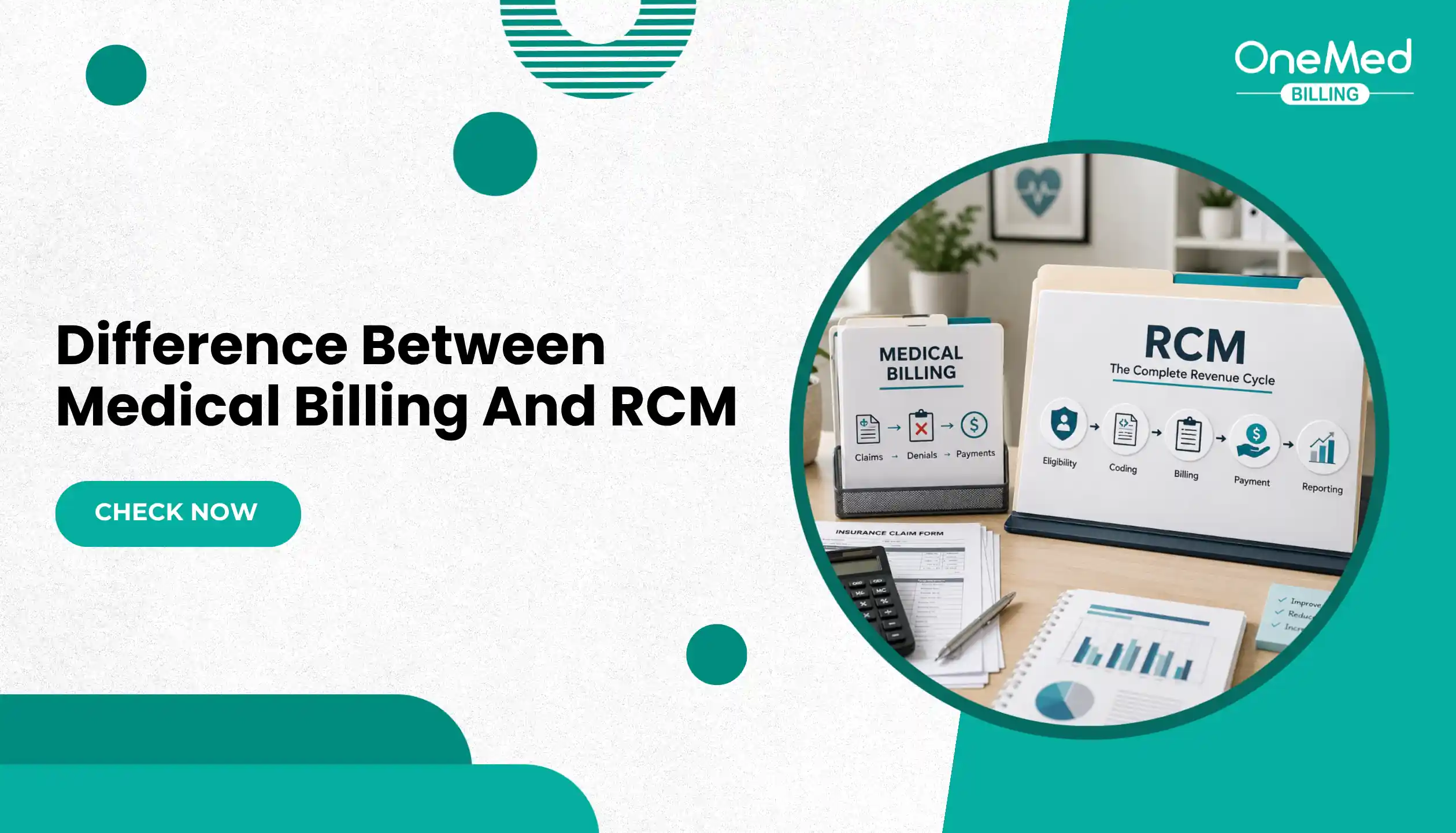
Medical billing outsourcing and RCM outsourcing often overlap, but they solve different levels of problems. Outsourcing Medical billing is usually the right fit when your main issue is claim handling after the visit. RCM outsourcing is broader and makes more sense when revenue problems are starting earlier in the process, such as intake, eligibility, authorizations, coding, charge capture, or patient collections.
If your claims are going out late, denials are not being followed up, or A/R is aging, medical billing outsourcing may be enough. But if denials are being caused by missed eligibility checks, incomplete patient information, authorization gaps, coding issues, or weak handoff between front desk and billing, then RCM outsourcing may be a better fit.
| Area | Medical Billing Outsourcing | RCM Outsourcing |
| Best fit | When the billing team needs help after the visit | When the full revenue workflow needs structure |
| Main problem it solves | Claim submission, denials, payment posting, and A/R delays | Front-end, middle-cycle, and back-end revenue gaps |
| Starts from | Usually after the service is documented | Before the visit, starting with patient and insurance checks |
| Common tasks | Claim submission, payment posting, denial follow-up, A/R follow-up | Eligibility, prior authorization, coding support, charge entry, claims, denials, payments, reporting |
| Operational impact | Reduces pressure on billing staff | Connects front desk, clinical documentation, billing, and collections |
| Best for small practices when | Billing work is delayed but front-end workflow is mostly stable | Revenue issues are coming from multiple steps, not just billing |
For a small practice, the choice depends on where the revenue leak is happening. If the issue starts after the claim is created, medical billing outsourcing may solve it. If the issue starts before the claim is created, RCM outsourcing gives better control because it looks at the full path from patient scheduling to final payment.
When Should a Small Practice Consider Outsourcing Its Revenue Cycle?
A small practice should consider RCM outsourcing when revenue problems are happening in more than one area of the workflow. If the issue is only claim submission, medical billing support may be enough. But if problems are starting from eligibility, authorizations, coding, charge entry, denials, payment posting, A/R follow-up, or reporting, then the practice may need broader RCM support.
1. Front-End Errors That Keep Turning Into Claim Denials
Many denials start before the claim is even created. Wrong patient details, old insurance cards, missed eligibility checks, or incomplete intake information can all create payment issues later. Small practices often do not notice these problems until the denial comes back, but by then the visit is already complete and the billing team has to spend extra time fixing it.
2. Prior Authorization Delays That Slow Down Reimbursement
Some services need payer approval before care is provided. This is common for imaging, procedures, therapy, DME, specialty visits, and high-cost treatments. If authorizations are missed, started late, or not tracked properly, the claim may be denied even when the service was needed.
3. Coding and Charge Entry Delays Before Claims Go Out
If charges are entered late or coding questions are not resolved quickly, claims cannot be submitted on time. This creates a gap between the visit date and the payment cycle. Even a few days of delay on every claim can affect monthly cash flow.
4. Repeated Denials That Come From the Same Issues
If the same denials keep happening every month, the issue is usually not random. It may be caused by eligibility errors, missing authorizations, incorrect modifiers, coding mistakes, documentation gaps, or payer-specific rules.
5. A/R Growing Past 60 or 90 Days Without Regular Follow-Up
When unpaid claims keep aging, cash flow becomes harder to manage. Claims over 60 or 90 days often need more follow-up, better payer communication, and faster action before they become difficult to collect.
6. Delayed Payment Posting That Makes Reports Less Accurate
Payment posting is not just a data entry task. If payments are posted late or incorrectly, the practice may not know which claims are paid, which balances are still open, or where underpayments are happening.
7. Unclear Revenue Reports That Make Decisions Harder
Small practices need clear reports to understand collections, denials, A/R aging, payer delays, patient balances, and overall revenue performance. Without clear reporting, it becomes difficult to know where money is getting stuck.
8. Overloaded Staff Handling Too Many Revenue Cycle Tasks
In many small practices, the same team handles scheduling, eligibility, patient calls, billing, payment posting, denial follow-up, and payer communication. When staff are stretched too thin, important revenue tasks can easily fall behind.
Which RCM Tasks Should You Outsource First?
Small practices do not need to outsource the full revenue cycle at once. The better approach is to start with the tasks that create the most payment delays, denials, or staff pressure. Once those areas improve, you can decide whether to expand support.
| Priority | RCM Task | Why Outsource It First |
| 1 | Denial management and appeals | This should be a top priority if denied claims are not being worked consistently. Denials directly affect money the practice has already earned, and repeated denials often point to deeper workflow problems. |
| 2 | A/R follow-up on aging claims | If unpaid claims are sitting past 60 or 90 days, cash flow becomes harder to manage. Outsourcing A/R follow-up helps keep payer calls, claim status checks, and payment delays moving on a regular schedule. |
| 3 | Eligibility verification and benefits checks | This is important if denials are coming from inactive coverage, wrong insurance details, missed referrals, or unclear patient responsibility. Better front-end checks help prevent problems before claims are submitted. |
| 4 | Prior authorization support | This should be considered if approvals are often missed, delayed, or tracked manually. A dedicated team can submit requests, follow up with payers, and reduce authorization-related denials. |
| 5 | Payment posting and reconciliation | Late or incorrect posting can make reports unreliable and hide underpayments, open balances, or payer issues. Clean posting gives the practice a clearer financial picture. |
| 6 | Coding review or coding audits | Small practices may not need full coding outsourcing, but periodic audits can help catch modifier errors, documentation gaps, undercoding, and payer-specific coding issues. |
| 7 | Reporting and revenue cycle analysis | If you cannot clearly see where revenue is delayed, reporting support can help track A/R aging, denial trends, payer delays, collection performance, and patient balances. |
Full RCM Outsourcing vs Partial RCM Outsourcing
Small practices do not always need to outsource the entire revenue cycle. The right choice depends on where the problem is happening, how much internal support you already have, and how much control you want to keep inside the practice.
| Area | Full RCM Outsourcing | Partial RCM Outsourcing |
|---|---|---|
| Meaning | An outside team manages most or all revenue cycle tasks | You outsource only selected tasks |
| Best for | Practices with multiple workflow gaps | Practices with one or two problem areas |
| Common tasks included | Eligibility, authorization, coding support, claims, denials, payment posting, A/R, reporting | Denials, A/R follow-up, eligibility checks, prior authorization, or coding audits |
| Control level | More work is handled outside the practice | More control stays with the internal team |
| Transition effort | Needs more planning and system access | Easier to start with less disruption |
| Best use case | Revenue cycle feels disorganized across many steps | Internal team is good, but needs support in specific areas |
Full RCM outsourcing makes sense when the practice needs broad support across the full revenue cycle. This may be the right option if front-desk errors, authorization delays, coding issues, claim delays, denials, payment posting, and reporting problems are happening together.
Partial RCM outsourcing is better when your internal team is doing some tasks well but needs help in specific areas. For example, you may keep billing in-house but outsource denial management, A/R follow-up, eligibility verification, or prior authorization support.
For most small practices, partial outsourcing is often the safer starting point. It lets you fix the biggest revenue problem first, measure results, and then decide whether to expand support later.
How Much Does Outsourcing RCM Cost for Small Practices?
The cost of outsourcing RCM depends on the scope of work. A practice that only needs help with denial management or A/R follow-up will usually pay less than a practice outsourcing most of the revenue cycle.
Most RCM and medical billing companies use one of three pricing models: percentage of collections, flat monthly fee, or per-claim pricing. Percentage-based pricing is commonly seen around 4% to 10% of collections, while many small practices may fall closer to the middle range depending on specialty, claim volume, denial rate, and services included. Per-claim pricing may also be used when the practice only needs support with selected tasks.
For a small practice, here is a simple way to estimate cost:
If your practice collects $75,000 per month and the RCM fee is 6%, the monthly cost would be:
$75,000 × 6% = $4,500 per month
But price should not be judged by percentage alone. A lower fee may look attractive, but it may not include denial management, A/R follow-up, payment posting, reporting, old A/R cleanup, or patient billing support. That means the practice may still lose money through delayed or unworked claims.
Before comparing RCM pricing, check what is included:
- Claim submission
- Payment posting
- Denial management
- A/R follow-up
- Eligibility verification
- Prior authorization
- Patient statements
- Monthly reports
- Old A/R cleanup
- Clearinghouse or software fees
Since every practice has different claim volume, specialty needs, payer mix, and current revenue gaps, the most practical way to understand cost is to review your current workflow and get a quote based on your actual needs. As an RCM company, we can help you review the services your practice may need and provide a clear quote based on scope, volume, and support level.
How to Choose the Right RCM Partner?
Choosing the right RCM partner is not only about pricing. For a small practice, the right partner should understand your workflow, improve collections, reduce avoidable denials, and give you clear visibility into where revenue is getting delayed.
Look for these things before making a decision:
Experience with small practices
Small practices need a partner who understands limited staff, tighter cash flow, and the need for simple communication. The company should not offer a hospital-style process that feels too heavy for your team.
Support across the full revenue cycle
A good RCM partner should be able to support front-end, middle, and back-end tasks. This may include eligibility verification, prior authorization, coding review, claim submission, denial management, payment posting, A/R follow-up, and reporting.
Specialty knowledge
Your RCM partner should understand your specialty’s payer rules, common denial reasons, CPT codes, modifiers, documentation needs, and authorization patterns.
Clear reporting
You should receive reports that are easy to understand. At minimum, reports should show collections, denial trends, A/R aging, payment posting status, and payer delays.
Defined communication process
Ask who your main contact will be, how often updates will be shared, and how urgent billing issues will be handled. Good communication keeps both teams aligned.
Transparent pricing and scope
Confirm what is included in the fee before signing. Check whether old A/R, denial follow-up, patient statements, reporting, software fees, and clearinghouse fees are included or separate.
Simple onboarding plan
The partner should explain how they will access your systems, review open claims, handle payer setup, and start working without disrupting daily operations.
How to Keep Control After Outsourcing RCM?
Outsourcing RCM should not feel like you are handing over your practice’s money and hoping for the best. It should feel like you finally have support, while still knowing exactly what is happening with your revenue.
The best way to keep control is to stay involved in the right places. You do not need to check every claim yourself, but you should review the main numbers every month, such as collections, denials, A/R aging, payer delays, and unpaid claims. These reports tell you whether your revenue cycle is improving or if something still needs attention.
Keep communication simple. Have one person from your practice and one person from the RCM partner’s team who speak regularly. This avoids confusion and makes sure important issues do not get missed. If a denial pattern is growing, if payments are delayed, or if old A/R is building up, you should know early, not months later.
The goal of outsourcing is not to lose control. The goal is to remove daily billing pressure while gaining better visibility. A good RCM partner should make your revenue cycle easier to understand, not harder. You should feel more informed, more supported, and more confident about where your money is going.
Final Advice
You do not need more billing stress on top of patient care, staffing, and daily operations. If revenue is getting delayed because denials, A/R, eligibility checks, or authorizations are not being handled consistently, it may be time to look at where the process is breaking.
You do not have to outsource everything at once. Start with the area that is creating the most pressure or holding back cash flow. The right RCM support should help you feel more in control, not less.
If you want to understand where your revenue cycle is slowing down, you can contact our team for a simple workflow review. We can help you identify the right starting point and build a process that reduces revenue leaks, supports your staff, and helps you collect more of what your practice has already earned.
Frequently Asked Questions
Find quick answers to common questions about this topic, explained simply and clearly.
When should a company consider outsourcing?
Consider outsourcing when claim volume outgrows staff capacity, A/R days are rising, denials are frequent, hiring is costly, or you need specialized skills like coding, analytics, or 24x7 follow up without adding headcount.
What are the benefits of outsourcing RCM?
Outsourcing can lower overhead, improve clean claim rates, speed reimbursements, reduce denials, and provide scalable staffing. You also gain expertise in coding, compliance, and payer rules without building a large in-house team.
When outsourcing, what should you need to consider?
Confirm HIPAA compliance, data security, and clear SLAs. Check experience with your specialty, EHR, and payors. Review pricing model, reporting access, communication cadence, and transition plans to avoid disruption.
What is the best example of outsourcing?
A small clinic that shifts coding, charge entry, claim submission, payment posting, and denial follow up to a certified RCM vendor while keeping front desk collections in house. The clinic cuts A/R days and avoids new hires.